

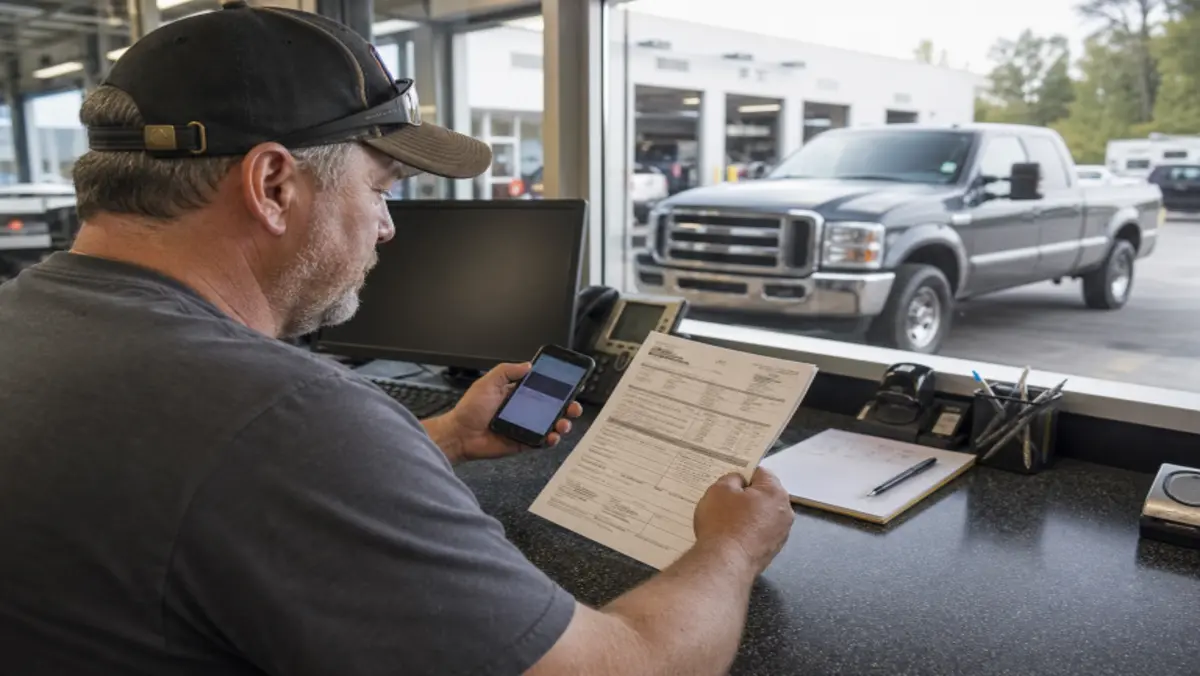
A pickup truck is often more than transportation. It may be used for commuting, hauling equipment, towing trailers, or supporting a family business. When the same issue keeps bringing it back to the service department, owners need a practical way to separate a one-time repair from a continuing problem. Reviewing Chevrolet Silverado complaints can also help owners understand the value of documenting recurring concerns rather than relying on memory alone.
The goal is not to assume that every repeat visit indicates a major defect. Some symptoms have several possible causes, and intermittent problems can be difficult to reproduce. Still, careful records, clear communication, and timely safety decisions can make the repair process more productive.
Why Repeat Repairs Matter
One repair visit rarely tells the whole story. A warning light may disappear after a sensor replacement, then return days later due to a wiring issue, a software fault, or another component. Each return visit creates useful context: what the driver reported, what the technician found, what work was performed, and whether the symptom returned.
Owners should distinguish a new issue from the return of an old one. Record what happens, when it occurs, outside temperature if relevant, speed, load, towing conditions, and how often the symptom appears. “Check-engine light returned after highway driving with a trailer attached” is more useful than “truck is acting up again.”
Recall Work vs. Regular Repair Work
Not all dealership work is the same. A safety recall involves a known safety-related defect or failure to meet a federal safety standard. A warranty repair concerns a problem covered by the vehicle’s warranty terms. A technical service bulletin gives repair professionals diagnostic or repair guidance, but it is not automatically a recall. Routine maintenance includes expected services such as oil changes, tire rotations, filter changes, and brake wear items.
- Safety recall: A manufacturer’s action to address a safety risk, generally with a free remedy.
- Warranty repair: Covered work that depends on the warranty’s time, mileage, and other conditions.
- Technical service bulletin: Repair guidance for a known concern that may affect only certain vehicles or conditions.
- Routine maintenance: Scheduled service needed to maintain normal operation.
Owners can use the official VIN recall lookup tool to see whether a specific vehicle has an unrepaired safety recall. A recall result may list the affected system, the safety risk, and the available remedy.
How to Check a Truck’s VIN
- Locate the 17-character VIN on the lower driver-side windshield area, registration, insurance card, or title.
- Enter the VIN into the recall lookup tool rather than relying only on a year-and-model search.
- Review the recall number, affected component, risk description, and repair status.
- Contact an authorized dealership to ask about parts availability and appointment timing.
- Ask whether the notice includes parking, towing, or driving restrictions while awaiting service.
A VIN search is more precise because recalls may apply only to certain production periods or equipment combinations. It also may not show recalls that were already repaired, very recently announced campaigns, or certain non-safety manufacturer programs.
Warning Signs That Need Prompt Attention
Some symptoms can affect safety or leave a truck unreliable when it is needed most. Prompt professional attention is appropriate for sudden power loss, brake pedal changes, steering difficulty, vibration at speed, repeated warning lights, fluid leaks, burning smells, electrical failures, or grinding, knocking, clunking, and repeated clicking noises.
Do not assume a warning light is harmless because the truck still moves. A problem affecting braking, steering, acceleration, visibility, fuel systems, tires, or vehicle control may require stopping the use of the truck until it can be inspected.
Records Every Owner Should Keep
Documentation is often more reliable than memory, particularly when visits are spread across months. The Federal Trade Commission advises consumers to obtain a completed repair order that describes the work performed, parts supplied, costs, and odometer readings. Its guidance on completed repair orders also supports keeping a written record of each transaction.
- Repair orders, invoices, estimates, and payment receipts
- Recall notices, service messages, and manufacturer correspondence
- Photos of warning lights, leaks, damaged parts, or dashboard messages
- Videos capturing sounds, vibration, startup failures, or intermittent behavior
- Towing, rental vehicle, rideshare, and other out-of-pocket receipts
- The date, mileage, adviser name, reported symptom, repair performed, and result
A simple repair log can use five entries for every visit: date, mileage, problem reported, work performed, and whether the problem returned. Keep paper copies in a folder and scan them into a backed-up digital file.
How to Prepare for a Dealer Visit
Before arriving, write down the symptoms and bring the earlier repair orders. Explain whether the problem occurs during startup, braking, turning, towing, acceleration, or at a certain speed. Show relevant photos or videos, and ask the service adviser to describe the complaint specifically on the repair order.
Read the document before leaving. “Steering feels strange” is less helpful than “steering becomes heavy during low-speed turns after the engine has warmed up.” Specific details give the technician a better starting point and preserve an accurate record.
How to Build a Repair Timeline
A timeline puts the events in order and makes repeat failures easier to see. Begin with the first symptom, then list each diagnostic visit, repair attempt, pickup date, and return of the problem. Include time out of service, missed work, canceled trips, towing events, and rental costs.
- Day 1: Warning light appears or driving symptom begins.
- Day 5: Truck enters the dealership for diagnosis.
- Day 6: Part replacement, adjustment, or software update is completed.
- Day 10: Same symptom returns.
- Day 12: Truck returns for a follow-up inspection.
When It May Be Unsafe to Keep Driving
Use caution when a truck develops a serious brake, steering, tire, fuel, electrical, or power-loss concern. Pull over safely if a major warning light appears alongside unusual behavior. Do not attempt to recreate a suspected failure on public roads, and use a tow service when safe operation is in doubt. Follow any “do not drive” or parking instructions included in a recall notice.
Practical Next Steps After a Failed Repair
- Return to the dealership and state clearly that the same symptom has returned.
- Request a complete copy of the new repair order before leaving.
- Ask whether an open recall, technical bulletin, or updated repair procedure may be related.
- Contact the manufacturer’s customer assistance department and retain the case number.
- Organize all records, photos, receipts, and communications in one place.
- Review state-specific consumer protection options if the truck remains unreliable.
Available remedies can depend on the truck’s age, mileage, warranty status, repair history, downtime, and applicable state law. Case-specific questions may require advice from a qualified consumer or legal professional.
Common Questions
Does a recall mean the truck cannot be driven?
Not always. Some recall notices permit limited use until repair parts or an appointment are available, while others include urgent restrictions. Follow the instructions for the specific recall.
Are recall repairs free?
Safety recall remedies are generally provided without charge by an authorized dealership. Confirm that the recall is open for the VIN and ask what repair will be performed.
What if the same problem returns after a repair?
Schedule another inspection, bring every earlier repair order, and describe exactly how the symptom returned. The prior records can help compare earlier findings with the current condition.
Can a used truck have an open recall?
Yes. A used truck can still have uncompleted recall work even if the current owner never received a notice. Checking the VIN before purchase and after taking ownership is a sensible precaution.
Conclusion
A truck that repeatedly returns to the shop deserves a careful record rather than a quick guess. VIN checks, detailed repair orders, clear symptom notes, and prompt safety choices help create a fuller picture. When a problem persists, organized documentation provides the dealership, manufacturer, and qualified advisers with a stronger basis for addressing it.