
Introduction
There are individuals whose lives become inseparable from the communities they serve people whose personal stories and professional commitments weave together into something far greater than any single achievement. Joe Gonzalez of Des Moines, Iowa, is one such individual. A Mexican immigrant who arrived in the United States at the age of five, he would go on to spend more than four decades as a trailblazing law enforcement officer and then reinvent himself entirely as one of the most celebrated champions of Latino culture and heritage in the American Midwest. His journey from a young boy navigating the language barriers of a new country to a nationally recognized community leader is both deeply personal and profoundly universal. It is a story about the immigrant experience, about belonging, about the quiet and relentless decision to give back to the place and the people that gave your family a new beginning. This article explores Joe Gonzalez in full his origins, his career, his cultural impact, his challenges, and the enduring legacy he continues to build well into his seventh decade of life.
Who is Joe Gonzalez?

Joe Gonzalez is a retired law enforcement officer, a community organizer, and the executive director of Latino Resources Inc., the nonprofit organization that produces the Iowa Latino Heritage Festival the largest ethnic cultural event in the state of Iowa. He is widely regarded as one of the most consequential Latino figures in Iowa’s modern history, a man who spent the better part of his life bridging cultural gaps, advocating for underrepresented communities, and creating pathways for Latino youth to thrive in American society. Known for his warmth, humility, and an almost legendary inability to say no when someone asks for help, Gonzalez has become a living symbol of what it means to live the American dream not just for personal advancement, but in service to others. His recognition by AARP Iowa as a “Hidden Gem,” his induction into the Iowa Latino Hall of Fame, and his designation by DSM Magazine as one of the 2023 Sages Over 70 are among the many honors that reflect a life spent quietly transforming communities from the inside out.
Origins and Background
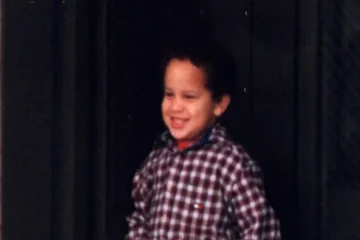
Joe Gonzalez was born in Yurecuaro, a small municipality in the state of Michoacán, Mexico. His early childhood was shaped by the rhythms of a rural Mexican community, but those rhythms changed abruptly in 1957 when his family made the decision to emigrate to the United States. He was five years old when he arrived in Des Moines, Iowa, along with his mother and two younger brothers, following his father, who had preceded them to work on the railroad a common story among Mexican immigrants of that era who were drawn to the American Midwest by labor opportunities. What the Gonzalez family was seeking, at its most basic level, was what countless immigrant families have always sought: a safer, more stable life with better opportunities for their children.
Growing up in Des Moines as one of very few Latino children in the city at the time, Joe faced an experience that was simultaneously isolating and formative. He was the oldest of seven siblings, and from a young age he took on a responsibility that would quietly shape everything he later became he served as the family’s interpreter, translating English for his Spanish-speaking parents in schools, government offices, stores, and wherever language created a barrier. This role placed him at the intersection of two cultures before he had the vocabulary to fully understand what that meant. He has spoken candidly about the pressure young immigrant children feel to assimilate completely, to become “American” at the expense of their native culture. “You wanted to be American so bad,” he has said. “It’s good to learn the English language, but you can begin to lose your culture when you want to be Americanized.” That tension between belonging to a new country and honoring the culture of origin would become one of the defining themes of his life’s work.
His educational path led him through Des Moines’s public school system, and it was during a high school criminal justice course that the idea of becoming a police officer first took root. Gonzalez saw law enforcement not as power but as service, as an avenue through which he could protect and advocate for the very communities that were most vulnerable communities like the one he grew up in. After graduating, he applied to a Des Moines Police Department cadet program, but there was a complication: he was not yet a United States citizen. In a gesture that he has described as pivotal, a police sergeant helped facilitate his naturalization, and at eighteen years old, Joe Gonzalez became an American citizen and joined the cadet program in November of 1971.
Achievements, Impact, and Significance
The breadth of Joe Gonzalez’s achievements is difficult to capture in a single section because his contributions span two entirely distinct and equally impressive careers. His first career unfolded over forty-two years within the Des Moines Police Department, where he served with distinction and became one of the first Latino officers in the department’s history at a time when diversity in law enforcement was not simply uncommon it was nearly nonexistent. When he joined the cadet program in 1971, he was one of only two Latino officers on the force, a fact that underscores just how much ground he was breaking simply by showing up.
Over the course of his four decades in law enforcement, Gonzalez built a reputation as an officer who understood that policing in diverse communities required more than physical presence it required relationships, trust, and cultural fluency. His most lasting institutional contribution during this period was his instrumental role in creating the Hispanic Outreach Neighborhood Resource Advocate program, known as HONRA (a word that means “honor” in Spanish). The program was born from a directive by an assistant police chief who recognized that the Latino community deserved a dedicated liaison someone who spoke their language, understood their culture, and could build the kind of trust that encourages community members to engage with law enforcement rather than fear it. Gonzalez was the natural choice to lead that effort, and the program became a model for how police departments can meaningfully serve immigrant and minority communities.
His second career began after a freak accident in 2013 in which he was trapped behind a truck cut short his time on the force. Rather than retreating into retirement, Gonzalez stepped into what would become perhaps the most publicly visible chapter of his life. In 2015, he took over as Executive Director of Latino Resources Inc., the nonprofit umbrella organization that manages the Iowa Latino Heritage Festival. Founded in 2002 by JoAnn Mackey under then-Governor Tom Vilsack, the festival had already established itself as a beloved annual event in downtown Des Moines. Under Gonzalez’s leadership, the festival has grown into a two-day family celebration representing 22 Latin American countries, featuring food, music, dance, cultural exhibits, and educational programming that brings tens of thousands of visitors to the Iowa capital each autumn.
Quantitative and Qualitative Analysis
When measuring the impact of a community leader like Joe Gonzalez, the numbers tell part of the story but never the whole of it. On the quantitative side, the data is compelling. Gonzalez served the Des Moines Police Department for 42 years a tenure that spans multiple generations of officers and community members. The Iowa Latino Heritage Festival, which he has directed since 2015, represents 22 Latin American countries and has grown its scholarship program to award multiple $1,000 scholarships annually to Iowa high school and college students. The Latino population in Des Moines has grown by more than 110% since the festival was first launched in 2002, making the cultural preservation and community-building work of the festival more relevant and more necessary with each passing year.
Qualitatively, the impact is even harder to quantify but far easier to feel. Colleagues, mentees, and community members speak about Gonzalez in the kind of language usually reserved for figures of genuine moral stature. Ahmed Agyeman, director of the Evelyn K. Davis Center for Working Families have described his commitment to education, workforce training, and economic mobility for the Latino community as “unmatched.” Amy Jennings, executive director of Lead DSM, has said that every person mentored by Joe considers him a lifelong resource and connector, and that she personally counts him as one of the kindest, most humble leaders she has known. These are not the words of casual acquaintances they reflect an accumulated legacy of genuine, sustained service. The qualitative dimension of Gonzalez’s impact is perhaps best summarized by his own philosophy, shaped by a Mark Twain quotation he carries with him: “The most important days in your life are the day you are born and the day you find out why.”
Public Recognition and Influence

The formal recognition Joe Gonzalez has received over the course of his career is extensive and cuts across multiple domains law enforcement, civic leadership, cultural advocacy, and community service. Among his most significant honors:
- Named Police Officer of the Year in 2003 by the Des Moines Rotary Club, one of the city’s most prestigious civic organizations.
- Received the Distinguished Service Medal Award from the Des Moines Chief of Police in recognition of his contributions to the department and the broader community.
- Awarded the LULAC Latin Heroes Award, a recognition from the League of United Latin American Citizens that honors individuals who have demonstrated extraordinary service to the Latino community.
- Recognized by the Domestic Abuse Coordinating Council, the Iowa Attorney General’s Office, the Iowa Organization for Victim Assistance, and United Latinas for a New Dawn, reflecting the breadth of social justice issues he has engaged with throughout his career.
- Inducted into the Iowa Latino Hall of Fame as part of the 2022 class, a distinction established by the Iowa Commission on Latino Affairs to ensure that the efforts of Latino leaders are honorably remembered and celebrated.
- Honored as one of dsm Magazine’s 2023 Sages Over 70, a designation that recognizes individuals over the age of seventy whose wisdom and continued contributions make them exemplary figures in the Greater Des Moines community.
- Graduated from the Greater Des Moines Leadership Institute now Lead DSM) and received its Community Vision Award.
Beyond formal accolades, his influence has extended to the halls of the United States Congress, where former Representative Cynthia Axne took to the House floor to honor him, describing his work as transformative and his dedication to uplifting the Latino community in Des Moines as having “changed the lives of countless young people.”
Financial or Career Metrics

Joe Gonzalez has never been defined by financial metrics, and his life’s work reflects a set of values in which service consistently takes precedence over personal gain. His 42-year career with the Des Moines Police Department represented a commitment to public service that, by its very nature, prioritizes community welfare over private wealth. Upon his retirement from law enforcement, he transitioned into the nonprofit sector as executive director of Latino Resources Inc., a role that operates on the organizational budget of a volunteer-driven cultural institution rather than the compensation structures of the corporate world.
The financial metrics that matter most in Gonzalez’s context are institutional: the scholarship dollars distributed to Latino students each year by the Iowa Latino Heritage Festival, the operational budget that sustains an all-volunteer team in producing a two-day festival for tens of thousands of attendees, and the economic activity generated by a major cultural event in downtown Des Moines annually. His career metrics are better measured in lives touched, programs launched, scholarships awarded, and the generational shifts in how Latino communities in Iowa see themselves and how Iowa sees them.
Challenges, Controversies, or Public Opinions

The arc of Joe Gonzalez’s life has not been without genuine difficulty. The most dramatic physical challenge came in 2013, when a freak accident in which he was trapped behind a truck effectively ended his police career before he was ready to leave it. The injury represented not just a physical setback but an abrupt close to an identity he had carried for over four decades. For a man who had defined himself through service and through the daily act of showing up for others in uniform, the sudden loss of that role could have been professionally and personally devastating. Instead, it became an opening.
Growing up as a Latino immigrant in a city with very few Latino residents also meant navigating racism, cultural erasure, and the constant negotiation between identity and assimilation. Gonzalez has spoken openly about the pressure he and other Latino children felt to abandon their cultural heritage in order to fit in with mainstream American society a pressure that ultimately inspired his life’s mission to create spaces where Latino culture is celebrated rather than suppressed.
In terms of public opinion, Gonzalez is considered something of a unifying figure, remarkable in an era of sharp social and political division. He is respected not only within the Latino community but also by law enforcement colleagues, elected officials, educators, and civic leaders across the political spectrum. He has spoken about the need for inclusive leadership and has expressed support for political candidates who champion unity and inclusivity. His stance has occasionally drawn attention during election cycles, but his focus has always returned to the community work that defines him.
Personal Life and Related Influences

Joe Gonzalez is, by all accounts, a deeply private man despite decades spent in the public eye. He is known to be close with his family and has spoken warmly about the sacrifices his parents made in bringing their children from Mexico to Iowa in search of a better life. His father’s decision to come to Des Moines for railroad work a story shared by many Mexican immigrant families of the 1950s set in motion a chain of events that shaped Joe’s life entirely. His gratitude for what that immigrant journey made possible is not rhetorical; it is the emotional engine behind everything he has done.
His personal philosophy is rooted in relational kindness. He is known for the belief that every interaction matters that treating every person with dignity and respect, regardless of their background or circumstances, creates ripples that extend far beyond any single moment. One of his most frequently cited personal maxims captures this beautifully: “To the world you might be one person, but to one person you might be the world.” This is not simply an inspirational slogan for Gonzalez; it is a practice he has applied every day of a career spent working with people at their most vulnerable crime victims, immigrants navigating an unfamiliar system, and young people in need of a mentor and a model.
His involvement in civic life has also extended to programs like “Bikes for Kids,” where he served on a board and helped raise money for children’s initiatives over a period of fourteen years. He has cultivated relationships across generations and across cultures, earning a reputation as a connector, someone who brings people together and builds bridges where others see walls.
Current Status and Updates

As of the most recent available information, Joe Gonzalez continues to serve as executive director of Latino Resources Inc. and remains actively involved in the planning and execution of the Iowa Latino Heritage Festival. Now in his seventies, he shows no signs of stepping back from the work that has defined the second chapter of his life. The festival continues to grow in both size and scope, drawing visitors from across Iowa and beyond to celebrate the richness of Latin American cultures represented in the state’s increasingly diverse population.
His 2023 recognition by DSM Magazine as one of the Sages Over 70 reflects a community’s ongoing acknowledgment that his contributions are not historical footnotes they are living, active, and continuing to shape the landscape of Greater Des Moines. He remains a liaison between the Des Moines Police Department and the Latino community even in retirement, continuing to lend his decades of relationship-building experience to bridge-building work. His story has been featured on Iowa Public Radio, in national civic publications, and in AARP’s Hidden Gems series, ensuring that new audiences continue to discover and be inspired by what he has built.
Conclusion
Joe Gonzalez represents something rare in American public life: a person whose commitment to community has remained unbroken and undiminished across an entire lifetime. From the five-year-old boy who crossed the border from Michoacán to Iowa with his mother and brothers, to the teenager who became a naturalized citizen in order to serve the very community that welcomed his family, to the veteran officer who built programs to protect the most vulnerable, to the cultural leader who now ensures that the heritage of 22 Latin American nations is celebrated and passed on to the next generation his story is not simply one of individual achievement. It is a story about what one person can mean to a community, and what a community can mean to one person. He has lived by the belief that giving back is not optional it is the purpose of a life well-lived. For anyone who has wondered what the American dream looks like in practice, in its most generous and community-centered expression, Joe Gonzalez is a compelling answer.
FAQs:
Where was Joe Gonzalez born and when did he come to the United States?
Joe Gonzalez was born in Yurecuaro, Michoacán, Mexico. He immigrated to Des Moines, Iowa, in 1957 at the age of five, following his father who had come to work on the railroad. He arrived with his mother and two younger brothers, and the family settled in Des Moines, where Joe would spend virtually his entire life.
How long did Joe Gonzalez serve in the Des Moines Police Department?
Joe Gonzalez served the Des Moines Police Department for 42 years. He joined as a cadet in November 1971, becoming one of the first Latino officers on the force, and retired in 2013 after a physical accident brought his law enforcement career to a close. During that time, he rose through the ranks and became a pivotal figure in community outreach, particularly for the Latino community.
What is the Iowa Latino Heritage Festival, and what role does Joe Gonzalez play in it?
The Iowa Latino Heritage Festival is an annual two-day event held in downtown Des Moines and is recognized as the largest ethnic cultural festival in the state of Iowa. It celebrates the cultures and traditions of 22 Latin American countries through food, music, entertainment, and educational exhibits. Joe Gonzalez serves as Executive Director of Latino Resources Inc., the nonprofit organization that produces the festival, a role he has held since 2015.
What is the HONRA program, and what was Gonzalez’s role in creating it?
HONRA stands for Hispanic Outreach Neighborhood Resource Advocate. It was a community policing program created within the Des Moines Police Department to serve as a dedicated liaison between law enforcement and the local Latino community. Joe Gonzalez was instrumental in establishing the program during the later years of his police career, when an assistant chief recognized the need for targeted outreach. The program was designed to build trust, provide a voice for Latino residents, and improve the relationship between the community and the police department.
What major awards and recognitions has Joe Gonzalez received?
Joe Gonzalez has received numerous honors throughout his career, including the Police Officer of the Year award from the Des Moines Rotary Club (2003), the Distinguished Service Medal Award from the Des Moines Chief of Police; the LULAC Latin Heroes Award; recognition from the Iowa Attorney General’s Office and other statewide agencies; the Community Vision Award from the Greater Des Moines Leadership Institute; induction into the Iowa Latino Hall of Fame (2022 class); and designation as one of dsm Magazine’s Sages Over 70 in 2023. He was also formally recognized by former U.S. Representative Cynthia Axne on the floor of the United States House of Representatives.