
Ensuring the safety of battery testing chambers is essential, especially considering the unique hazards associated with lithium-ion battery technology. As battery applications become more widespread, the pressure to guarantee safer testing environments for new and experimental battery systems grows alongside innovation. Facilities rely on implementing robust safety design practices to protect both personnel and equipment, and selecting a high-quality battery test chamber is a foundational step.
Poorly managed battery testing environments can pose severe risks—explosions, toxic chemical releases, and fires can arise from battery failure during testing. With advanced safety engineering and rigorous adherence to best practices, labs can significantly minimize these hazards. Understanding the considerations and systems that constitute a safe battery testing chamber helps companies prevent incidents and comply with international standards.
To further explore the technical background and regulatory requirements for battery testing safety, the National Fire Protection Association (NFPA) offers in-depth guidelines and resources. Their insights into fire hazards in battery technology are particularly valuable for testing facility managers and designers.
Explosion-Proof Structural Design
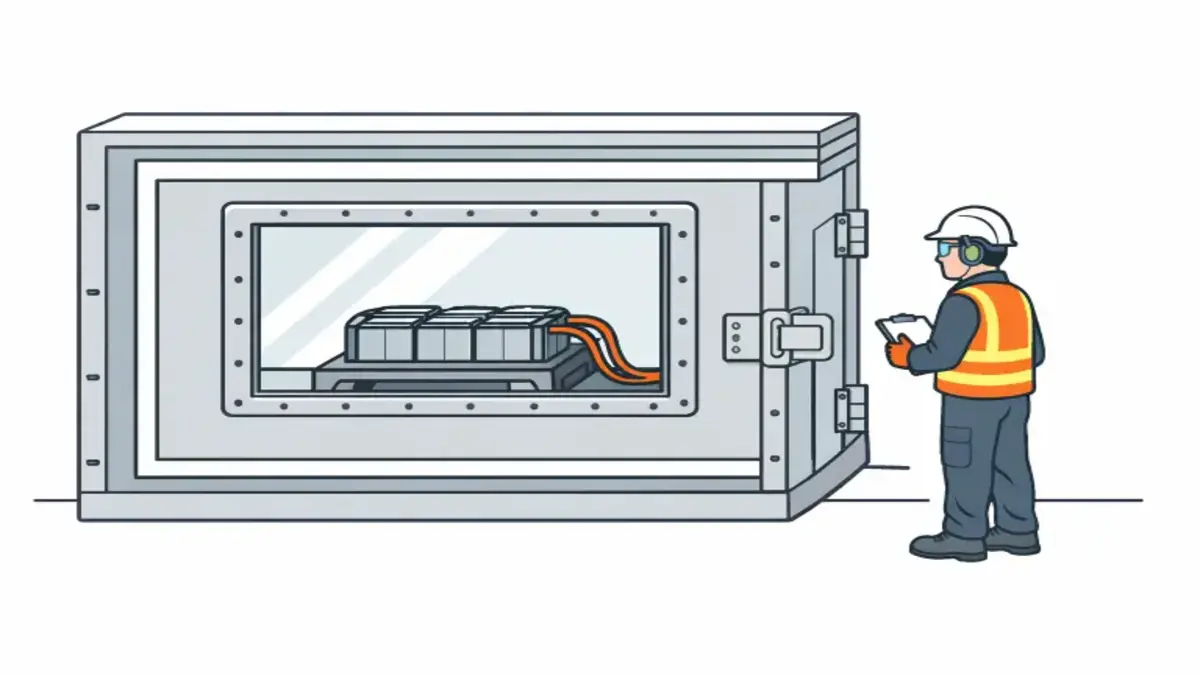
The foundation of a safe battery test chamber begins with explosion-proof design elements. This involves employing thickened steel plates and reinforced locking systems capable of withstanding internal blasts from battery failures. Test chambers often integrate multi-layered tempered glass equipped with explosion-proof films for observation windows. These engineering features enable a clear view of the battery under test while maintaining maximum structural integrity and protecting staff outside the chamber.
Manufacturers have developed innovative techniques, such as multi-barrier containment layers, to further reduce the risk of shard ejection and structural compromise. These measures are especially important when testing large battery cells or modules, which can store considerable amounts of energy and may fail catastrophically.
Additionally, ongoing research and collaboration between engineers and battery scientists is yielding even stronger containment options and safer material choices for new test chamber models. Modern facilities are increasingly incorporating modular design elements, allowing damaged components to be easily replaced and minimizing downtime. These advances contribute not only to safety but also to operational efficiency, supporting growing demand for extensive battery testing in automotive, consumer electronics, and grid energy applications.
Pressure Relief Mechanisms
Overpressure within a battery test chamber can result from thermal runaway or rapid chemical reactions. Modern chambers are equipped with automatic pressure relief valves, which open instantly when a pressure threshold is exceeded. This prevents compromised seals or breaches in the chamber wall, preserving safety for nearby personnel.
Sophisticated test setups often employ real-time digital pressure monitoring. These systems utilize sensors and controls to halt ongoing tests and trigger both alarms and ventilation measures if rising pressure indicates a potential risk. By continuously managing internal pressure, facilities can eliminate one of the most volatile dangers of battery testing.
In addition to these primary mechanisms, training staff to recognize early warning signs and facilitating regular maintenance of pressure relief components form an integral layer of overall risk mitigation. Proactive inspection schedules and drills ensure all parts function as intended during an emergency, reducing the likelihood of catastrophic failure and further embedding a culture of safety in laboratory operations.
Fire Suppression Systems
Rapid containment of fire is a core consideration for battery test chambers. Automatic fire suppression systems, such as gas-based extinguishing units (often using CO₂ or inert gases), proactively extinguish flames before they can cause further damage. Integrated smoke detectors activate these systems the moment combustion or abnormal heating signatures are detected.
Additional safety is often achieved through smoke exhaust pipes and forced ventilation. These features ensure that dangerous gases and fumes are quickly evacuated from the chamber after a fire event, protecting staff and maintaining air quality for subsequent testing sessions.
Compliance with Safety Standards
Strict compliance with international safety standards gives end-users and regulators confidence in a testing chamber’s reliability. Standards such as IEC 62133, UL 1642, and UN 38.3 dictate critical safety and performance benchmarks for battery testing. By ensuring chambers meet or exceed these standards, facilities reduce liability and demonstrate a commitment to best practices.
Accredited third-party certifications, such as those from TÜV or Intertek, further establish the chamber’s adherence to globally recognized protocols. Such compliance is often required for battery research, certification, and mass production approvals.
The rigorous documentation and recordkeeping required by these standards additionally serve to streamline audits, facilitate cross-border collaboration, and simplify the process for product approvals and market entry worldwide. For organizations competing internationally, this robust framework for compliance makes a significant difference in accelerating time-to-market and building trust with both business partners and regulators.
Innovative Safety Features
Technological advancements in battery testing chambers enable safer testing scenarios for high-energy and novel batteries. Some manufacturers have developed chambers with tertiary explosion protection. This involves layered containment and secondary suppression systems to manage destructive scenarios during abuse or failure testing, ensuring that even extreme incidents do not threaten the external environment.
Features like intelligent multi-stage protection, rapid gas venting, and reinforced modular walls cater to evolving battery chemistry, helping to future-proof laboratory safety as battery technology continues to advance.
Looking ahead, some chambers are integrating AI-powered analytics and remote monitoring to forecast hazardous events before they escalate. Predictive maintenance systems, enabled via IoT sensors, provide advanced warning for component replacement and allow for real-time diagnostics and troubleshooting. As these digital tools become more prevalent, they further enhance the resilience and adaptability of testing environments, driving safety innovation forward in parallel with battery development.
Real-World Applications
Leading companies in energy research and manufacturing have implemented these comprehensive safety protocols in their battery testing chambers. For example, test chambers certified with tertiary explosion protection, developed and approved by renowned authorities like TÜV, allow organizations to safely explore the limits of battery capabilities and failure modes.
The deployment of these advanced safety features has been vital for R&D teams, allowing them to simulate realistic failure events while keeping laboratory personnel safe and minimizing operational risks.
Industry collaborations and feedback loops between equipment suppliers and end users ensure that innovations in safety design are shared and standardized rapidly. Workshops, professional exchanges, and case studies disseminate best practices across the sector. This continual learning process leads to safer facilities everywhere and supports the overall growth of battery-powered technologies in mobility, sustainability, and energy infrastructure.
Conclusion
The implementation of robust safety design methods in battery testing chambers is indispensable for reducing the risks associated with lithium-ion and next-generation batteries. Through explosion-proof construction, adequate pressure relief, fire suppression systems, and strict compliance with international safety standards, test facilities can provide a secure environment that protects people, property, and intellectual innovations. The ongoing evolution of battery safety technology is critical in supporting the rapid growth and reliability demands of the energy storage industry.