
The size of a tent is perhaps the first question that a vendor needs to consider and answer, and the answer will define how everything else goes. Get it wrong, and you will have a space that is either too small for the events held in it, making the customers feel cramped in the entry area, or a space that is too large, making the place seem empty. In both cases, sales will be lost.
Luckily, there is a straightforward structure for this question, which almost always provides a correct answer.
Start With What the Event Allocates
First and foremost, the event booth space limits determine what is even possible. It is an industry standard to provide booths that measure 10×10 feet in all farmers markets, crafts fairs, street festivals, or open-air trade shows throughout North America. In virtually all events, the smallest booth size available is that of 10×10 feet, with a rare 10×15 or 10×20 offered to occupy two booths in one place, which, however, requires prior approval from the event organizers.
A typical 10×10 canopy tent, although offering 100 square feet of overhead space, takes somewhat more on the ground, due to the legs extending 6 to 12 inches beyond the canopy edges on both sides. Most aluminum frames come with such legs, so it would make sense to clarify this issue with the market management beforehand.
Failure to do so will result in being out of compliance with the vendor rules right away when trying to install your tent.
The 10×10: Why It Remains the Default for Most Vendors
This setup works by default as it offers the greatest level of versatility and does not cause any logistical problems when working with different kinds of vendors.
For example, a solo operator with a small table and merchandise will be able to fit easily, while two people working there will be able to do so without interfering with one another. Canopies will also fit in most SUV or hatchback cars without the need for a bigger cargo van. Setup will take one person, as well as the break-down process afterwards.
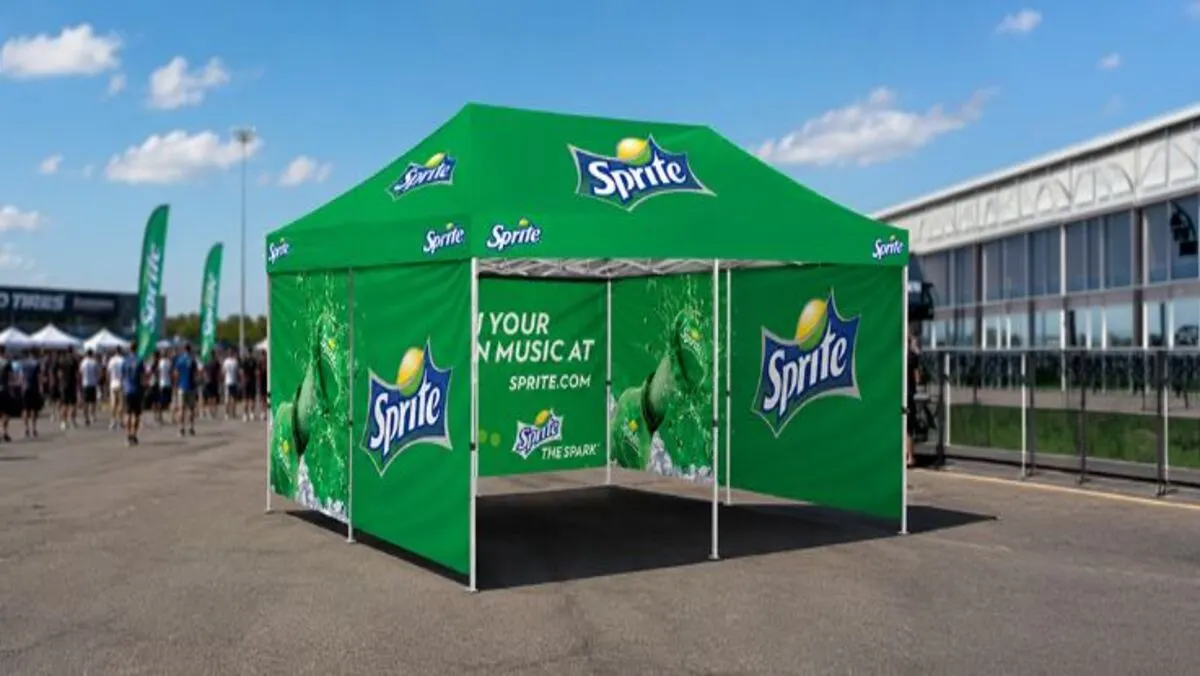
Heavy-duty canopy tents at the 10×10 size, such as a 10×10 Custom Canopy Tent, use commercial-grade aluminum frames with reinforced corner brackets and locking leg mechanisms.
These qualities are important if we talk about vendors participating in markets on a weekly or bi-weekly basis, where a 10×10 frame undergoes several cycles of assembly and break-down. In that situation, a professional frame will hold up for many years, while one from a home improvement store will show signs of structural wear-and-tear after one or two seasons of usage.
The only weakness of the 10×10 is that it fills up quickly if a vendor sells multiple products, requires a demonstration counter, or tends to gather clusters of customers at one time.
The 10×15: The Most Underused Configuration
The 10×15 adds five feet of depth to the standard footprint and unlocks a completely different booth layout. With 150 square feet, the vendor can maintain a genuine open entry zone at the front, a browsing or product display area in the middle, and a transaction or storage area at the rear. Customers can move through the space rather than standing in a cluster at the front edge.
Most market organizers offer 10×15 spaces for a modest additional fee, though vendors must request them in advance. The 10×15 is the right size for food vendors who need a separate prep and service zone, artists displaying large-format work, and any business that regularly has two staff members working simultaneously.
The logistics step up slightly. The tent frame is larger and heavier, and most 10×15 systems ship in two carry bags rather than one. A two-person setup is strongly recommended.
The 10×20: When You Need a Destination
A 10×20 canopy creates 200 square feet of covered space, which is enough to run a genuine multi-zone booth. Product display on one side, demonstrations or consultations on the other, open customer flow in between. At this scale, the booth stops functioning as a vendor table and starts functioning as a branded environment.
Pop Up Tents at the 10×20 scale are used by vendors with large merchandise ranges, businesses running product demonstrations, and companies using their market presence as a brand building exercise alongside direct sales. The additional space rewards the investment only when there is enough product, staff, and visitor volume to fill it. An undersized product range in a 10×20 makes the booth look sparse, which works against the brand impression the larger footprint is meant to create.
One practical note confirmed across multiple 2026 vendor guides: the deciding factor for the 10×20 is staffing, not budget. More space only generates a return when the team can actually activate the zones within it.
Anchoring Requirements at Every Size
Market organizers across North America require a minimum of 40 pounds of ballast per tent leg as a standard condition of vendor participation. For a four-leg 10×10, that is 160 pounds of total anchoring weight. Some markets require 50 pounds per leg.
On grass, 12-inch steel stakes driven at a 45-degree angle provide a reliable hold. On pavement, concrete, or asphalt, water-fillable or sand-fillable weight bags are the required method. Stakes do not penetrate hard surfaces and must not be used on concrete or paved vendor areas.
A tent that fails during an event is a safety incident. Markets enforce anchoring requirements for that reason, and vendors who arrive without proper anchoring equipment are turned away or asked to leave. Factor the weight requirement into the vehicle space and transport plan before committing to any tent size.
The Decision in Plain Terms
Go for a 10×10 if you are a single or double individual with a regular range of products, and the event has allocated a 10×10 for you. This is the case for most vendors who attend these kinds of events.
Upgrade to a 10×15 if you find that you often lack room, you need two employees who can do their own thing without getting in each other’s way, or customers gathering around the front end of your stall is causing you to lose browsing time.
Opt for a 10×20 if your event requires you to showcase product demonstrations, show different categories of products in separate zones, or if your branding depends on being seen at major events.
Always verify sizes from the event manager before buying. If the tent does not fit into the space allocated, all will be in vain.